
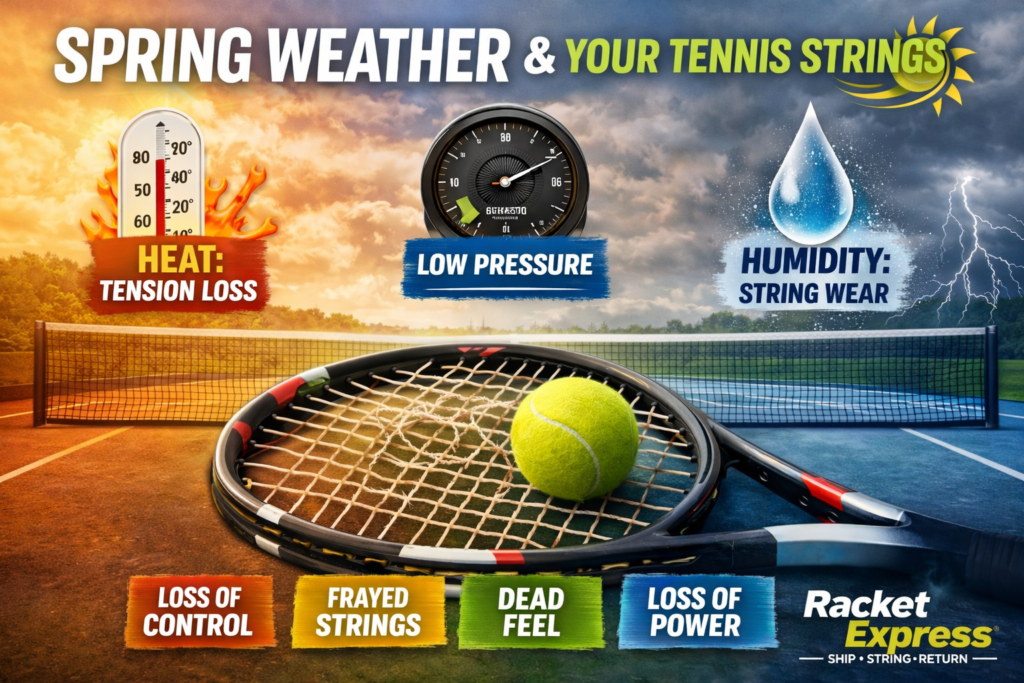
As winter fades and spring rolls in, most tennis players are eager to get back on the court. Warmer temperatures, longer days, and more consistent play are all great—but there’s one thing many players overlook: how seasonal changes impact your tennis strings.
If your game suddenly feels “off” this time of year, your strings—not your swing—might be the reason.
Why Spring Weather Changes Matter
Spring is a transitional season, which means fluctuating temperature, humidity, and air pressure. These environmental shifts directly affect the performance and durability of your strings.
Unlike your racket frame, strings are highly sensitive to the elements. Even small changes can alter tension, feel, and control.
Heat: The Hidden Tension Killer
As temperatures rise, your strings naturally lose tension faster.
Warmer air causes string materials—especially polyester and synthetic blends—to expand slightly. This leads to:
- Reduced string tension
- Less control on shots
- A “trampoline effect” (more power, less precision)
If you’ve noticed balls flying long more often in spring, this is likely why.
What to do:
You may need to increase your string tension slightly in warmer months or restring more frequently to maintain consistency.
Pressure & Altitude: Subtle but Important
Changes in air pressure—especially during spring weather swings—can also impact ball flight and string response.
Lower air pressure (common before storms) can make balls feel heavier and slower, while higher pressure can make them fly faster. Combined with looser strings from heat, this can create unpredictable results.
For players in areas with changing elevation or frequent weather shifts, this effect becomes even more noticeable.
What to do:
Pay attention to how your racket feels during different conditions. If consistency drops, it’s often a sign your strings need attention.
Humidity: The Silent String Wearer
Spring also brings increased humidity, especially in places like Florida.
Moisture in the air can:
- Soften natural gut strings
- Reduce durability of certain synthetics
- Cause tension loss over time
Even if you don’t play in the rain, humidity alone can shorten the lifespan of your strings.
What to do:
Store your racket in a climate-controlled space and avoid leaving it in your car or garage.
Signs It’s Time to Restring This Spring
If you’re unsure whether your strings are affected, look for these signs:
- Loss of control or accuracy
- Strings feel “dead” or muted
- Increased vibration or discomfort
- Visible fraying or movement out of place
Spring is one of the most common times players unknowingly play with worn-out strings.
Keep Your Game Consistent with Racket Express
Seasonal changes are unavoidable—but inconsistent performance doesn’t have to be.
With Racket Express, you can keep your strings fresh without disrupting your schedule. Our door-to-door service makes it easy to ship your racket to your trusted stringer and get it back quickly—no extra trips, no wasted time.
Ship. String. Return.
As easy as an Amazon return.