
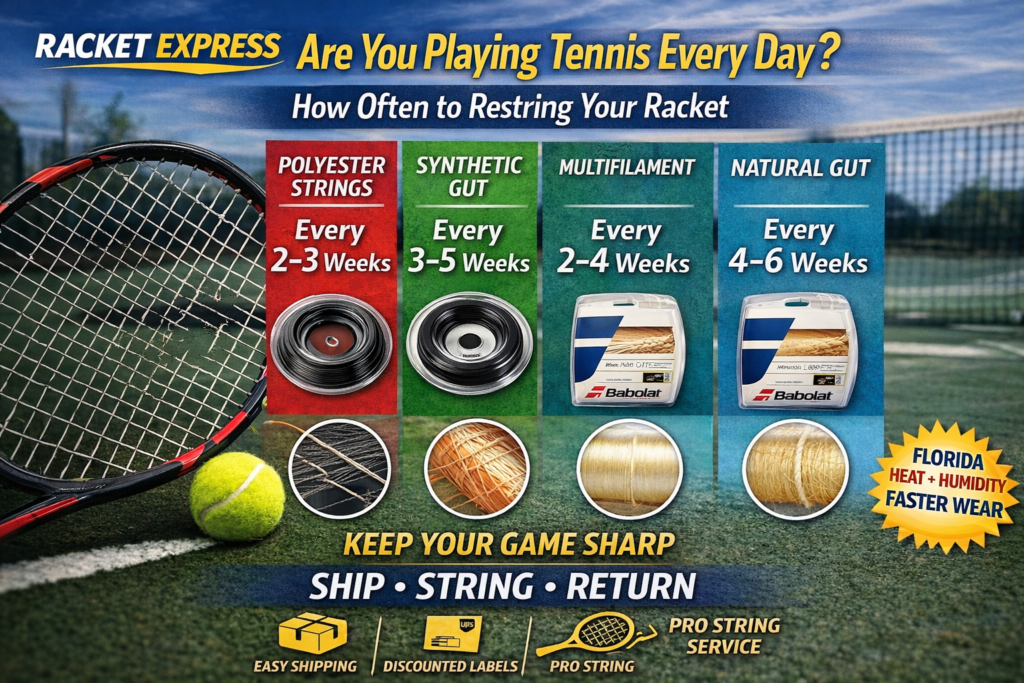
If you’re playing tennis every day, you’re putting serious mileage on your strings—whether you realize it or not. While your racket frame may last years, your strings are constantly losing tension, elasticity, and performance with every hit.
At Racket Express, we see a common mistake: frequent players waiting far too long to restring. The result? Loss of spin, inconsistent control, and a noticeable drop in performance.
If you’re serious enough to play daily, your restring schedule needs to match.
Why Daily Play Wears Strings Out Faster
Every time you hit a ball, your strings stretch and snap back. Over time, this repeated stress causes:
- Tension loss (even if strings don’t break)
- Reduced spin potential
- Less control and consistency
- A “dead” feel on contact
Add in heat and humidity—especially in places like Florida—and strings degrade even faster.
The General Rule of Thumb
A simple guideline most players follow:
👉 Restring as many times per year as you play per week
But for daily players, that’s just a starting point. String type plays a huge role in how often you actually need to restring.
How Often to Restring Based on String Type
Polyester (Poly) Strings
Best for: Advanced players, heavy topspin hitters
Restring Frequency: Every 2–3 weeks
Poly strings are popular for control and spin, but they lose tension quickly. Even if they don’t break, they go “dead” after about 10–15 hours of play. If you’re on the court daily, that happens fast.
Synthetic Gut
Best for: Recreational players seeking balanced performance
Restring Frequency: Every 3–5 weeks
Synthetic gut offers solid all-around playability, but daily use leads to gradual tension loss and fraying. You’ll notice less crisp shots and reduced consistency over time.
Multifilament Strings
Best for: Comfort and arm-friendly play
Restring Frequency: Every 2–4 weeks
Multifilament strings feel great but wear down quickly with heavy use. They tend to fray and lose control sooner than other options when used daily.
Natural Gut
Best for: Premium feel and excellent tension maintenance
Restring Frequency: Every 4–6 weeks
Natural gut holds tension better than any other string, but it’s still affected by frequent play—and especially by humidity. For daily players, regular restringing is still essential to maintain peak performance.
Signs It’s Time to Restring
Even if you’re not tracking weeks perfectly, your racket will tell you when it’s time. Look for:
- Shots flying long or lacking control
- Reduced spin on your topspin shots
- Strings shifting out of place and not snapping back
- A dull or “dead” feel when hitting
If you notice any of these, you’re already overdue.
Keep Your Game Sharp Without the Hassle
Restringing frequently can be inconvenient—but it doesn’t have to be.
With Racket Express, you can:
- 📦 Ship your racket directly from home
- 🏷️ Print discounted UPS shipping labels
- 🔁 Continue using your trusted stringer
- 🎾 Get your racket delivered back, ready to play
No extra trips. No waiting around at the shop.
Final Takeaway
If you’re playing tennis every day, your strings are one of the most important pieces of equipment affecting your game.
Quick Restring Guide for Daily Players:
- Polyester: Every 2–3 weeks
- Synthetic Gut: Every 3–5 weeks
- Multifilament: Every 2–4 weeks
- Natural Gut: Every 4–6 weeks
Fresh strings mean better control, more spin, and more confidence every time you step on the court.
Ready to Upgrade Your Game?
Stop playing with dead strings.
Ship. String. Return.
Visit RacketExpress.com and keep your racket performing at its best—without the extra effort.